
Least Visited National Parks in Tanzania :Which is the least visited national parks in Tanzania? While Tanzania boasts of 22 national parks, not all are extensively explored. Often, Tanzania safaris focus on the few leaving out others untapped. But here is a chance for you to embark on a journey to unearth some of the least visited parks in Tanzania

Among the least visited game safari parks in Tanzania include the Katavi National Park, Ruaha National Park, Gombe Stream National Park, Rubondo Island National Park and Saadani National Park among others. Here’s he detailed explanation as follows;
Katavi National Park
Katavi National Park is located in the northwestern part of the country within Katavi region, and located in the north of Rukwa Rift an extension of the western Rift valley. Katavi National Park is one of the least explored parks. Established in 1974 and occupying a land area of 4,471 square kilometers, the Park is a popular for its brown bears, volcanoes and remote wilderness. Katavi national park is home to over 400 bird species, including green pigeons, snake eagle, saddle billed stork, Senegal plover, knob billed duck, grey heron, open billed stork, ostrich, grey crowned crane among others.
Katavi National Park is also a special game-viewing destination of its own. The park protects different wildlife including large herds of elephants and buffaloes, frequently roaming together, offering a stunning view of nature. The park is also home to other animals such as zebras, giraffes, wild dogs, hyena, cheetah, reedbucks, waterbucks, topi, greater kudu, eland, duikers, warthogs, serval cats, primates like monkeys, baboons, bush babies, reptiles like the crocodiles, monitor lizards. Other attractions in this remarkable park include Lake Katavi, Chada Lake, Nkondwe mountain and Katuma river among others
On a safari in Tanzania, places to consider for a night stay include Katavi Wildlife Camp, Nomad Tented Camp, Mbali Mbali Katavi, Chada Katavi Fly Camp and Palahala Luxury Camp among others
Ruaha National Park
Ruaha is one of the biggest and least visited national parks in Tanzania, making it a perfect spot for anyone looking for a quiet safari experience. Situated in the central region of the country, Ruaha features a wide range of stunning landscapes, including steep hills and wide-open grasslands.
Gazetted in 1964, Ruaha National Park is 20,226 sq. km which makes it one of the Tanzania’s biggest national parks. Within the vast stunning remote landscape, there are diverse wildlife to explore. These include east African cheetahs, lions, buffaloes, wild dogs, spotted hyenas, giraffes, hippos, and sable antelopes among others.
More than 571 species of birds have been identified in the park, making it a great birding tour destination. As an important birding area, Ruaha national park diverse bird species include among others Meyer’s parrot, Southern ground hornbill, Tanzanian red-billed hornbill, White-bellied go-away-bird, White-bellied Bustard, Buff-crested Bustard, and Black-bellied Bustard among others.
Gombe Stream National Park
Gombe Stream National Park is a national park in Kigoma District of Kigoma Region in Tanzania, its stretches about 16 km north of Kigoma, the capital and the nearest town to the park. Gombe Stream National Park was stablished in 1968, it is one of the smallest national parks in Tanzania. The park is one of the smallest national parks in Tanzania, covering an area of about 35 square kilometers but is endowed with the world’s most sought-after attractions. The park is famous for the groundbreaking research conducted by primatologist Jane Goodall, who studied these intelligent creatures for over 60 years.
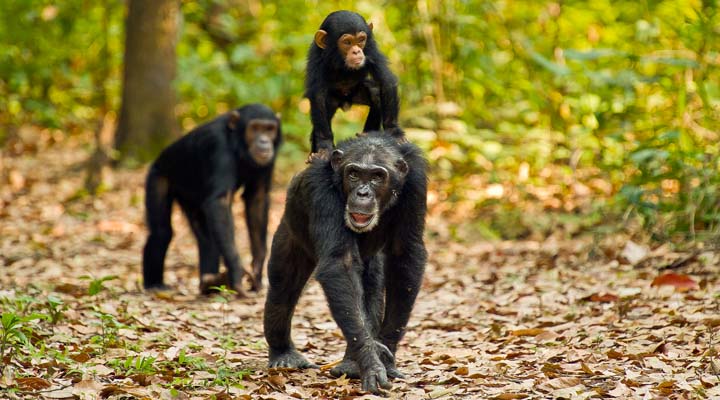
Gombe Stream National Park supports a diversity of wildlife in its varying habitats. These include the rare chimpanzees, olive baboon, red colobus monkeys, red-tailed monkeys, blue monkeys and blue monkeys
A good population of birds can also be spotted in Gombe including the Mousebird, Crowned Hornbill, Common Barn Owl, African Fish Eagle, Long-crested Eagle, Crowned Eagle, Little Sparrowhawk, African Harrier Hawk, Palm-nut Vulture, Osprey, White-winged Tern, Long-tailed Cormorant, African Darter, Great Cormorant and more.
A safari in Gombe Stream National Park allows you to engage in diverse activities including chimpanzee tracking, Hiking Jane’s Peak, bird watching, Walking safaris, and Camping in nature among others. Places to stay in and around Gombe Stream National Park include Mbali Mbali Gombe Lodge, Lake Tanganyika Hotel, Coast View Resort, Mwitongo Garden Hotel, Janda Lodge, Sunset Vista Hotel, One Point Lodge, Gombe Executive Lodge, Nzimano Hotel, and more.
Getting to Gombe Stream National Park by air transport means possible starting Dar Es Salaam to Kigoma, the nearest town which last approximately 1/30 minutes and then use a boat to reach to the park which also typically a short 30 to 45- minute ride across the Lake Tanganyika
Rubondo Island National Park
Rubondo Island, located on Lake Victoria, is one of Tanzania’s most secluded and tranquil safari destinations. The park offers a combination of forest and lakeside experiences, with opportunities to explore the island’s pristine wilderness. Rubondo Island National Park, gazetted in 1977 and covers an area of approximately 457 square kilometers and boasts a rich diversity of habitats, including forest, wetland and rocky shorelines.
A huge concentration of wildlife exists around the shores of Rubondo Island. These include the chimpanzees, endangered African elephants and endemic sitatunga. Other wildlife species to explore in this island include hippos, otters, bushbucks, mongoose, suni antelopes, crocodiles, warthogs, large spotted genet, bush pig, hyrax, giraffes, velvet monkeys, vervet monkeys, black and white colobus monkeys among others.
Birds to search for on birding tours in Rubondo Island National Park include Black-headed Gonolek, Grey Parrot, Speckled Pigeon, White-faced Whistling Duck, Spur-winged Goose, Ring-necked Dove, Freckled Nightjar, African Palm Swift, Yellowbill, African Emerald Cuckoo, Allen’s Gallinule, Eastern Grey Plantain-eater, African Openbill, Marabou, Hamerkop, Black-headed Heron, and others.
Rubondo is famous for its chimpanzee reintroduction project and is an excellent spot for birdwatching, fishing, boat safaris, nature walks, Fishing safari and cultural visit among others
Saadani National Park
Saadani National Park is situated on the coast of Tanzania, Saadani National Park is a unique destination that combines the best of both land and marine safaris. The park is the only wildlife reserve in Tanzania that is located along the coastline, offering visitors the chance to see wildlife, including elephants and lions, along with beautiful beach views. Other animals include warthogs, waterbucks, Masai giraffes, blue duikers, dik-diks, bohor reedbucks, Lichtenstein’s hartebeest, vervet money, blue monkeys, yellow baboon, crocodiles, mongooses, genets, hippos, Nile monitors, sable antelopes among others are also found monitors here.
The park boasts over 300 species of birds, making it a crucial birdlife haven. Birds sighted in this stunning park includes African Jacana, African Cuckoo Hawk, African Skimmer, Eastern Paradise Whydah, Greater Flamingo, Lanner Falcon, Lesser Flamingo, Lesser Kestrel, Little Bittern, Long-Crested Eagle, Mangrove Kingfisher, Pel’s Fishing-Owl among others. Saadani is also an important area for marine conservation, with opportunities for boat safaris along the Wami River and the Indian Ocean.
Best time to visit Tanzania’s safari parks
Visits to Tanzania National Park can be done at any time of the year. However, the dry months of the year are the best to explore and experience the stunning national parks in Uganda. This can be done during the long dry months; June to September, or short dry months that is from December to February.

