
Nyerere National Park is formerly the northern part of Selous Game Reserve, one of the most scenic and sought-after Tanzania national parks that travellers get to explore while on a Tanzania safari in the southern part of Tanzania. For travellers who fly to Dar es Salaam and would like a Tanzania safari tour to see the amazingly diverse and abundant wildlife in Tanzania, Nyerere National Park is the Tanzania safari park to look out for.

The park is a newly established Tanzanian national park that is now the largest national park in Africa, part of the larger Selous Game Reserve. The park was named after the first president of the Republic of Tanzania, the late Mwalimu Julius Kambarage Nyerere.
Location of the Park
Nyerere National Park, as stated above, is the northern part, and more of the Selous Game Reserve, pronounced “seluu”, is the largest Tanzanian national park and protected game area. The park is 30,893 square kilometres in size, covering a big part of Liwale District in western Lindi Region, southwestern Pwani Region, and northeastern Ruvuma Region, as well as a big portion of southeastern Morogoro Region. The total size of the National Park is larger than some countries in Europe, and it is almost twice the size of Belgium.
Established in 2019, Nyerere National Park, formerly Selous Game Reserve, covers a total area of about 30,893 square kilometres, inhabited by a wide range of flora and fauna that would keep you captivated for up to 5 days in this almost remote Tanzanian national park that is fit for exclusive Tanzanian safari experiences like honeymoon Tanzanian safaris.
With such a size, Nyerere National Park has one of the most undisturbed ecological and biological processes, which also includes a wide diversity of wildlife, including a variety of predators and prey.
Attractions
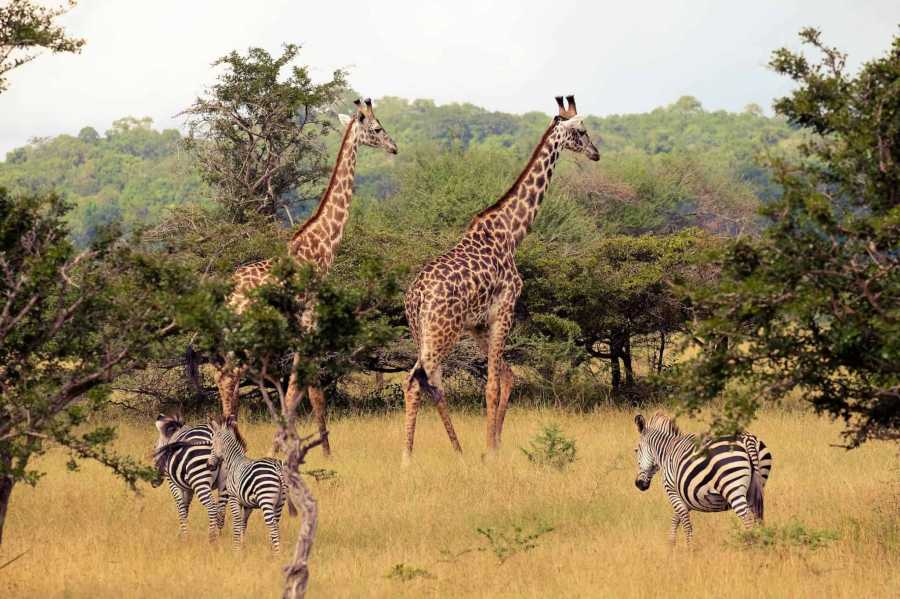
Nyerere National Park, Tanzania, has many attractions. Among the various attractions is the beautiful Rufiji River, which is a great boat safari destination as well as a great hippo viewing destination. Other attractions in the park include wildlife that includes the rare African wild dogs, among others; birds; and amazing landscapes of the park area.
Activities
There are several activities in this park that travellers can enjoy while on a Nyerere Park safari. Some of the park activities include Nyerere game drives, guided walking safaris, boat safaris, sport fishing, and bird watching. Night game drives in Nyerere National Park are also possible!
Park Entrance Fees
To enjoy the various attractions and activities in the park, there are many fees to be paid to the governing body that protects and conserves the park, which is the Tanzania National Park Authority (TANAPA). Nyerere National Park entrance fees for foreign non-residents are 70 USD per person per day, excluding the 18% VAT. For travellers spending a night inside the park, concession fees of 71 USD per person per night are to be paid.
How to get to Nyerere National Park
Given the remoteness of the southern part of Tanzania and the parks in it, getting to Nyerere National Park is usually by flight from Dar es Salaam. Another way to access it is, however, by road from Dar es Salaam, which is about 230 km away.
Best time to visit Nyerere National Park
Nyerere National Park can be visited all throughout the year, given that the park animals are residents. The best time to visit the park, however, is during the dry season, which is from June through October, as well as late December through February, when animal viewing is easier, given they often converge in the available water points, especially the Rufiji River.
Accommodation in Nyerere National Park
There are several park accommodations to choose from, though not as many in number, depending on your preferred category and budget. Some of the accommodations in the park include Beho Beho Camp, Nyerere National Park lodges, Selous Kinga Lodge, Siwandu Camp, Lake Manze Tented Camp, Serena Mivumo River Camp, and Rufiji River Camp, among many others.
The park is a beautiful Tanzanian national park to visit while on a Tanzanian safari, any time of the year. This Nyerere Park safari can, however, still be combined with other Tanzania parks like Ruaha National Park, Mikumi National Park, Ngorongoro Crater, Tanzania, and Serengeti Park safaris, among other Tanzania national parks. Get in touch with a reputable Tanzania safari planner who can put together a memorable safari, including a visit to Nyerere Park, which is a perfect honeymoon safari.
Visitor and Safety Guidelines
The park is a wild and unspoiled ecological reserve where wildlife can roam freely. Visitors are strongly encouraged to follow the guidelines of the park to ensure their safety, as well as wildlife conservation. Visitors should always act on the advice of their guide, never feed the animals, and refrain from making loud noises that could disturb the wildlife. Visiting along the routes and trails established by the park will reduce the chance of intruding into sensitive areas of the park and will help preserve the integrity of the ecological system.
Wildlife Safety Rules
- Stay at a Safe Distance: You should always remain in your vehicle when in the field. Respect the animal by keeping your distance when observing predators or large mammals such as elephants and buffalo.
- No Sudden Movement: Sudden movements or noises may cause alarm.
- Never Feed Animals: Feeding animals leads them to change their behaviour in a potentially harmful way, affecting the animals and the visitor.
- Do Not Walk at Night Without a Guide: Animals are most active at night. Walking without a guide can be dangerous to you and your companions.
- Clean Campsites: Store food properly so that it isn’t accessible to animals.
These rules will help you have a responsible and safe experience in the field with the wildlife.
Climate and Weather
The climate in the park is tropical, and it remains warm all year. It is recommended to wear light, breathable layers and to use a hat and sunscreen. Since the area is malaria endemic, visitors may also want to consider anti-malarial medication and insect repellent. Hydration will be very important, especially during the dry season. In the rainy season (March to May), some roads may be muddy and/or impassable, and so travellers will want to plan accordingly.
Guided Tours and Ranger Escort
Exploring Nyerere National Park is most enjoyable, safe, and informative with a certified guide or ranger escort. Guides know animal behaviours and exhibit awareness of safe routes and the best places to view wildlife. When doing a walking safari or a boating safari on the Rufiji River, a ranger escort will be required for the visitors’ safety.
Conservation and Community Involvement
Ongoing Conservation
Nyerere National Park, situated in the larger Selous ecosystem, is an important stronghold for lions, African wild dogs, elephants, and a variety of birds. Anti-poaching patrols, habitat protection, wildlife monitoring, and maintaining a sustainable tourism practice to support the park for future generations are all a part of what drives conservation efforts.
Role of Local Communities
The local communities surrounding the park play a critical role in the protection of the park. Communities gain a direct benefit from the park if it thrives, and it creates a conservation ethic in the long term through jobs, ecotourism programmes, and cultural exchange.
Visitors: Sustainability Practices
Visitors are helping with conservation simply by travelling responsibly and supporting lodges and operators who are committed to sustainability. Please do not litter, use a refillable water bottle, and choose ethical tour operators that practise low-impact tourism.
Travel Recommendations & Essentials
What to Bring
– Lightweight, neutral-colored clothing
– Comfortable walking shoes
– A warm layer for early morning game drives
– Wide-brimmed hat and sunscreen
– Personal medication and insect repellent
– Binoculars for wildlife viewing
Photography Guidelines
– A long lens will allow for a safe distance while capturing wildlife
– Natural light is best during early morning and late afternoon
– Avoid using flash near animals
– Patience is key; usually, the best wildlife moments will happen while you wait quietly
Conclusion
Nyerere National Park is one of Africa’s last true wilderness frontiers. It has large open expanses of land, winding rivers, and a multitude of iconic safari wildlife. The park offers a unique Tanzania safari experience to visit the park with no overcrowding that may be observed in more commercial tourism markets.
Whether you glide down the Rufiji River on a boat safari, traverse golden savannah plains while learning about the wildlife, or lie under the big night sky listening to the sounds of nature, Nyerere National Park will offer you a unique and profound connection with nature, offering authentic travel with excitement and the untamed natural beauty of Africa.

